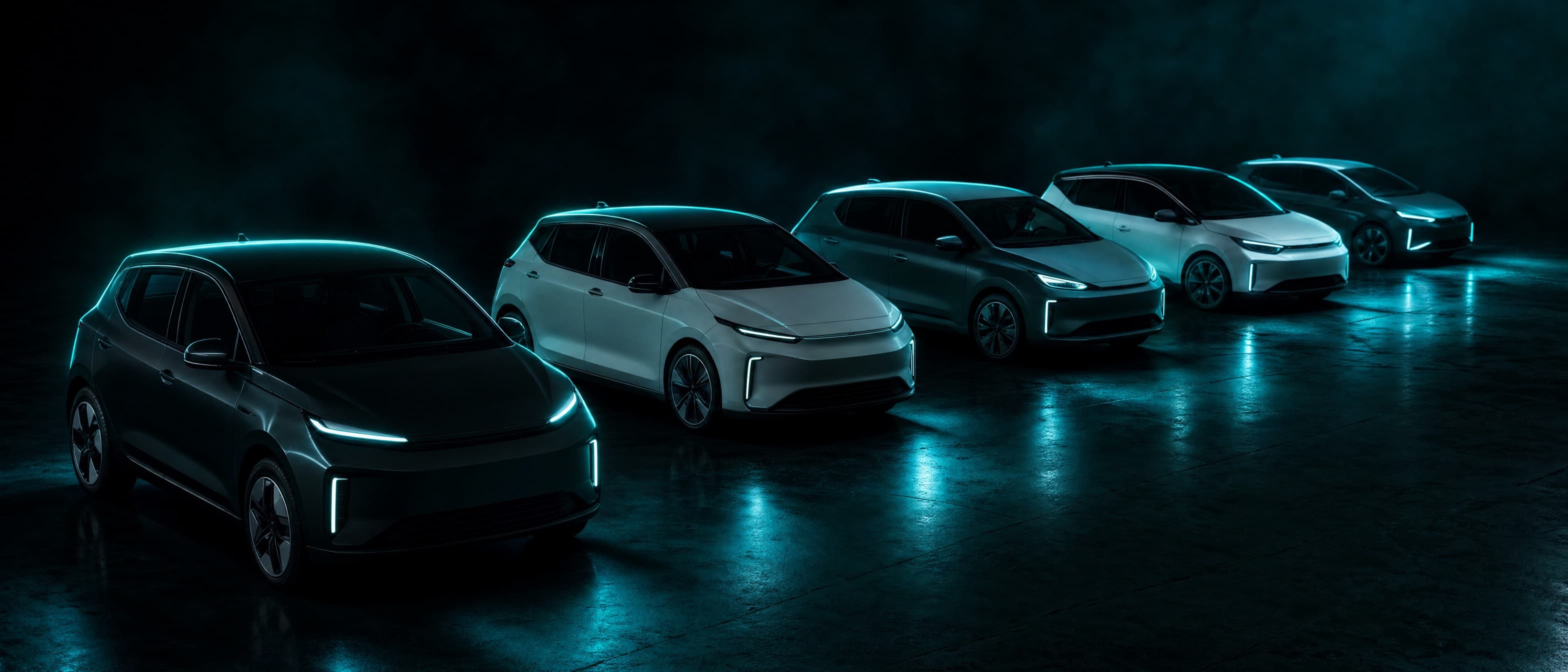
Small, Electric, Under €30,000: The Best in Five Categories for 2026
For years, the European EV market had a hole in it. You could buy a very small, very basic electric city car, or you could buy a proper electric SUV — with very little in between, and almost nothing under €30,000 that felt like a real, everyday car. In 2026, that gap has closed. Half a dozen manufacturers have launched genuinely competitive small EVs in the same twelve months, and buyers finally have a real choice instead of a compromise.
We looked at the field the way we'd look at it for a client: not by picking one "winner," but by asking what each car is actually best at. Below are our five categories, the strongest contender in each, and — because prices in this segment are currently a moving target — a note on what we found when we checked every figure specifically for the Austrian market.
Advertised starting prices in this segment often assume a specific finance or trade-in bonus, and in more than one case, the cheapest version a manufacturer announced isn't actually the cheapest version you can order today. We've flagged it wherever it applies. If a price looks too good, it's worth asking what has to be true for you to actually pay it.
The All-Rounder: Renault 5 E-Tech
From €27,560
Some cars win a category by being the best at one thing. The Renault 5 wins this one by being good enough at everything. 120 PS, a 40 kWh battery good for up to 312 km WLTP, and a design that has aged from "retro gimmick" to "just correctly proportioned" in the space of two years.
What actually earns it the top spot, though, isn't the spec sheet. It's the track record. The Renault 5 has become Europe's best-selling electric car in the B-segment, with more than 100,000 units sold since launch and Renault's EV sales growing 63.2% in the first half of 2026 alone — nearly double the market's overall growth rate. In Sweden it holds 56% of the small-EV segment on its own. That's not hype; that's hundreds of thousands of people who've already lived with one.
For a buyer who wants one car that does the job without asking them to think too hard about trade-offs, this is still the safest recommendation in the class.
The Range & Charging Champion: Hyundai Inster
Up to 370 km WLTP, DC charging up to 85 kW
Numbers alone: the Hyundai Inster's larger 49 kWh battery gets you further on a single charge than almost anything else in this segment, and a 10–80% top-up takes around 30 minutes at a fast charger. For a car with an exterior length of just 3.83 metres, that's a genuinely impressive result — Wien to Salzburg on a single charge, according to Hyundai's own figures.
Pricing in this configuration sits close to the €30,000 ceiling once you move up from the entry-level 42 kWh version, but it stays inside it, keeping the Inster genuinely competitive rather than just competitive on paper. It's also worth noting the Inster picked up both "World Electric Vehicle 2025" from the World Car Awards and Germany's "Goldenes Lenkrad" — recognition that tends to go to cars that hold up in daily use, not just in a press release.
The Design Icon: Cupra Raval
From €27,400 (currently orderable trim, incl. current EV incentive)
This is the most subjective category on the list, and we're not going to pretend otherwise. But if one car in this segment is designed to make you look twice in a parking lot, it's the Raval.
Cupra calls the design language "eyes like a crocodile" — sharp, triangular daytime running lights, a lowered sports chassis, and an interior with animated, configurable light projections on the door panels that borrow more from concept cars than compact hatchbacks. The launch campaign, fronted by Kim Petras, made no secret of the fact that this car is selling a feeling first and a spec sheet second.
One honest caveat: the Raval is brand new, and the version that generated all the initial buzz — the €25,950 base model — isn't actually orderable yet; Cupra has pushed it to September 2026. Right now, the cheapest Raval you can actually order is the Plus trim, listed at €27,400 in Cupra's own configurator, with the same 37 kWh battery as the base version but more power. It's a car we'd recommend to someone who wants to be an early adopter and is comfortable with that — not yet one with the years of real-world reliability data that the Renault 5 has already built up.
The Price Breaker: Renault Twingo E-Tech Electric
From €19,990 (Evolution, plain list price)
The obvious pick for this category would be the Dacia Spring, long marketed as Europe's cheapest EV. It's worth being direct about why it isn't here: as of today, the Spring doesn't appear in Dacia Austria's current model lineup at all. The only trace of it on their site is a teaser page for a next-generation version still to come. Until that changes, it can't be this list's price champion, however good the headline number used to look.
The Twingo E-Tech takes the spot instead, and it does so cleanly: €19,990 for the Evolution trim, straight from Renault's official Austrian price list, with no bonus stacking required to get there. The trade-off for that honesty is a modest spec — a 27.5 kWh LFP battery good for 262 km WLTP and 50 kW DC charging (10–80% in about 30 minutes) — clearly behind the rest of this list on range. The Citroën ë-C3 remains a close runner-up here, with a current promotional price around €19,959 once several manufacturer and financing bonuses are stacked, plus meaningfully more range at 320 km WLTP.
For fleet buyers, second cars, or anyone whose daily driving rarely exceeds a small EV's real-world city range, the Twingo is currently the most straightforward "just the cheapest car that works" pick in this segment — with a price you can actually go and order today, no fine print required.
The Space Wonder: Fiat Grande Panda
From €22,990 (Pop), up to €27,490 (La Prima) — current configurator prices
"Grande" is doing some marketing work in that name — the Panda is still a small car by any measure — but it earns the title. At 361 litres, its boot beats the mechanically related Citroën ë-C3 (310 litres) despite sharing the same underlying platform, and folding the rear seats opens up 1,315 litres, more than enough for a genuine weekend away. Reviewers testing it have consistently come back with some version of the same observation: front and rear passengers sit like they've moved up a size class from what the car's footprint suggests.
At up to 320 km WLTP range and 100 kW DC charging (a 20–80% top-up in around 27 minutes), it's not chasing the range crown — but for buyers who need to actually fit family life into a small car, it currently offers more usable space per euro than anything else on this list that's actually available to order today.
What We'd Watch
Three cars deserve a mention even though they didn't win a category outright, precisely because of the pricing trap we mentioned earlier. The Škoda Epiq was announced with a headline price of €26,880 and up to 440 km of range — genuinely best-in-class numbers, on paper. But as of today, that entry trim still isn't orderable; the cheapest Epiq you can actually configure and buy right now starts at €33,280, well outside this list's budget. The same applies to the base Cupra Raval discussed above.
The Dacia Spring belongs on this list for the opposite reason: its famous €16,900 starting price wasn't quietly replaced by a higher one — the car itself has quietly disappeared from Austria's order books while its successor is prepared. All three are worth revisiting once the numbers you can read online turn back into numbers you can actually sign a contract for.
The Bigger Picture
What's changed in 2026 isn't just that these cars exist — it's that buyers can now choose based on what they actually need, rather than settling for whichever compromise happened to be available under €30,000. That's a genuinely new position for this segment to be in.
It's also a market that keeps shifting underneath itself. Bonus programmes expire, entry trims arrive months after they're announced, and list prices vary meaningfully between countries and even between one dealer's promotion and the next. If you're sourcing any of these models — for your own stock or for a client — that's exactly the kind of detail worth double-checking before it goes into a quote.
We move first.