Why We Take Over the Entire Purchasing Process for Some of Our Partners
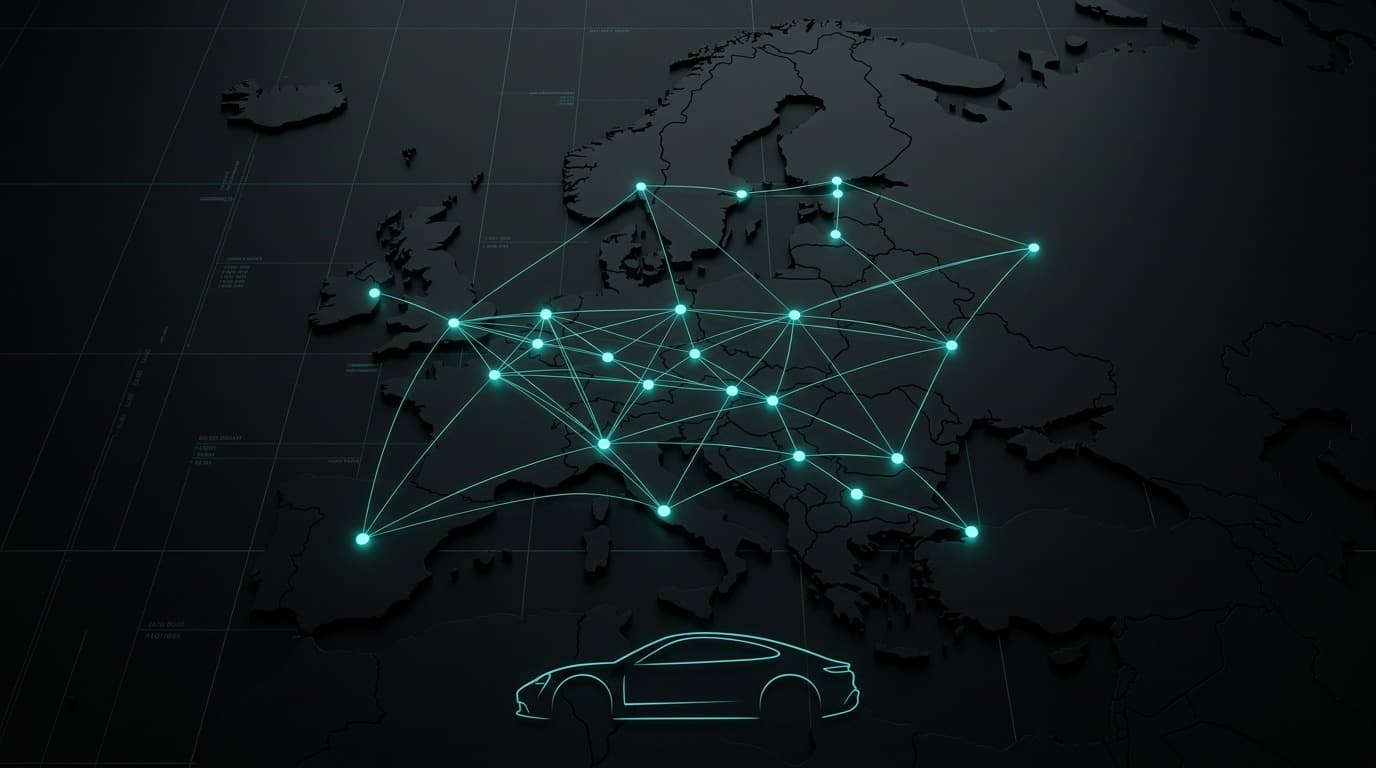
Europe is not one market. It's sixteen rulebooks.
One country subsidises electric vehicles. The next one doesn't. Diesel is taxed so heavily in one market that certain models become commercially pointless there — while two borders away, the same car sells without a problem. Sometimes the rule applies to new vehicles only. Sometimes it changes in the middle of a quarter.
Every one of those rules moves a price. And every price movement is either an opportunity or a loss, depending on whether someone noticed it in time.
This is the problem dealers actually bring to us. Not "we can't find cars." The market has become too complex to keep an overview of while also running a dealership.
We keep that overview, because it's the only thing we do.
The part of purchasing nobody puts on the balance sheet
Ask a dealer what buying costs, and you'll get a number: the invoice.
The real cost sits somewhere else. It's the hours spent comparing offers across markets. It's the special promotion that ran in another country and expired before anyone heard about it. It's the tax change that made a segment attractive for six weeks. It's the three units that sat on the lot for months because the specification was slightly wrong for the market they were bought for.
And it's the risk almost nobody plans for: the dependency on one person. We've seen companies where purchasing rested on a single experienced buyer for years — a genuine anchor in the business. Then that buyer resigned, and everything stood still.
That risk has always existed for business owners. It isn't going away.
What "taking over purchasing" actually means
We can handle stock acquisition end to end: new vehicles from the brands we cover, demonstrators, or entire packages. We negotiate. We solve the logistics. We take care of the paperwork.
Our responsibility ends exactly where our partner wants to take over. Some hand us the whole process. Some hand us a segment. Both work.
Increasingly, that includes used vehicles. Rising prices — particularly in the EV segment — have turned young used cars into the new cars of yesterday, and demand for them has never been higher. At the same time, agency sales models are making new car conditions harder to access for the trade. The shift toward used stock isn't a trend. It's a rational response to how the market has changed.
Who decides what gets bought
This depends entirely on the partnership.
With partners we've worked with for years, there's a budget. We buy within it. That arrangement is built on a track record, not on optimism — and both sides know that in the used car business, roughly one vehicle in ten won't produce a spectacular result. That's the trade, not a flaw in the process.
Other partners prefer to look before anything is signed. We source the offers, compare them, present them — and the final go comes from the buyer. Perfectly reasonable, and equally workable.
Both models exist because dealers are different. Neither requires anyone to give up control they want to keep.
How a partnership starts
A dealer tells us what they need: models, specification level, price segment, volume.
Then we check whether it's realistic. Honestly, expectations and market reality often sit some distance apart — and it's better to find that out before the money moves than after. So we come back with an assessment: what's achievable, at what price, and where an alternative would serve the dealer better.
That alternative is often the interesting part. Because we buy for several businesses at once, we have access to volume conditions no single dealer would reach alone. Sometimes that means adjusting a specification or a model variant slightly — and getting a significantly better price in return.
Which is what the dealer actually needs. Not a specific options list, but competitive pricing and configurations that can hold their own against the showroom down the road.
How we get paid — and why that matters
We usually offer two structures, plus the combination of both.
A small amount per unit, independent of what the car eventually sells for.
Little or nothing is charged at purchase. Instead, we take a share of the profit actually realised on the sale. We like using this one at the start of a partnership — it's the most direct way to show what we can do without asking anyone to take our word for it.
A small amount per vehicle plus a small share of the profit. This is the most common arrangement, and the reason is simple: it keeps the balance right for both sides over the long run.
The percentages differ, and there's a reason we don't publish them. We work with used vehicles from €10,000 and with premium cars well into the high six figures. Any single number would be misleading.
What doesn't differ is the principle. In the profit-based models, we earn when our partner earns.
What we don't promise
We can't remove dependency entirely. Purchasing has always required know-how — what sells, where the market is heading, and the products themselves. That knowledge sits somewhere, and wherever it sits, you rely on it.
What changes with an external partner is the shape of that risk. You're no longer dependent on one individual, one resignation letter, one competing offer. Continuity is something a company can provide even when something unexpected comes up.
And every partnership starts with a trial period. It's rarely been evaluated negatively — but it's there for a reason.
Whether you buy five cars a month or a thousand a year
The model works for the local dealer buying a handful of units and for groups managing several hundred or several thousand vehicles a year. We scale the people on our side accordingly, always in close coordination with one contact person on yours.
If managing all or part of your purchasing through us sounds worth exploring, get in touch. No commitment — just a conversation about what's possible, what it would cost, and how approvals and risk would be handled on your side.
We move first.